|
|
 |
|
|
Vasculum E


English. Late 19C. By Flatters and Garnett Ltd. Black japanned tin. Adjustable leather strap. L 11.5 inches (29cms) x H 5.5 inches (14cms) x D 3 inches (7.5cms).
These were used commonly by plant collectors. The specimens collected in the wild would not be squashed until the collector is ready to arrange and ‘press’ them between newspaper to dry them prior to mounting on herbarium sheets. Many found items are in tin japanned in black and are Edwardian.
Students of Botany in the UK, up until the 1960’s or so were expected to make a herbarium of pressed and dried wild plants. They would collect their specimens in a vasculum and then treat them as I indicated earlier. They were being manufactured as late as the early 60’s.
Professionals and plant hunters (the latter often being country gentlemen and ladies) would do the same, but in earlier times in Africa, the Far East and elsewhere, the vasculum was the standard method of ‘preserving’ parts of plants until they could be pressed. The time difference between collection and pressing would vary between a few hours and no more than a couple of days.
Thus the vasculum is only for temporary holding of plant material.
In order to preserve plants to return them to Europe to grow, the usual methods would be to collect seeds, bulbs, tuber, corms or other organs that go though a cycle of growth and die-back. I doubt that the vasculum would be used for this. Paper bags would do.
A risky way to ship whole plants, on the whole small ones, was to keep them in tea chests, but even then the time scale is rather short, because the plant material will rot. With one of the plants with which I have worked, a cutting in a polythene bag for 2 weeks is just about the limit. I could get the cutting to root and so establish a plant. With bulbs, corms and tubers, there is no real problem.
The first example mentioned in 1704 by the University of Cambridge described a Candlebox pressed into service as a plant collecting box. In early 19C the Vasculum started to grow in use and became very common. One of the oldest Vasculums was in the late 1700’s used by George Don the conservator of The Edinburgh Botanical Garden. Charles Darwin’s vasculum is to be found in the Linnean Society of London.
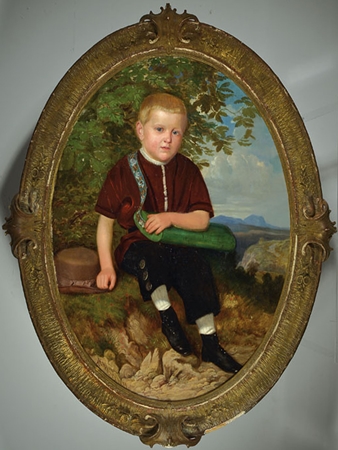
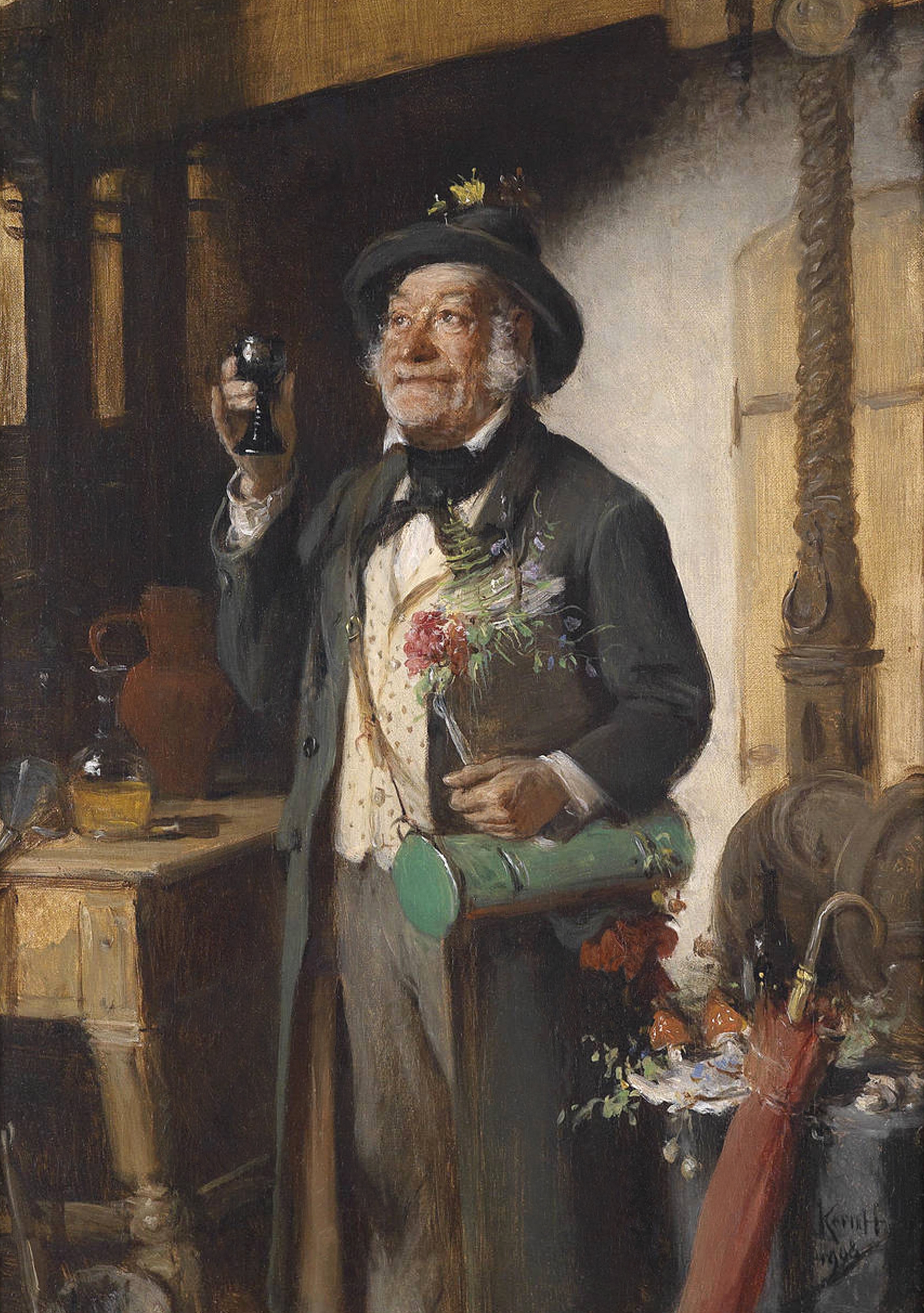
The 2 images below: Knabe mit Botanisiertrommel by Carl Mittenzwey 1859 and Der Botaniker by Hermann Kern 1908.